
Algae facts for kids
Quick facts for kids Algae |
|
|---|---|
| Organisms that perform oxygenic photosynthesis, except land plants | |

Marine algae growing on the sea bed in shallow waters
|
|

Freshwater microscopic unicellular and colonial algae
|
|
| Traditional algal divisions | |
| Prokaryotic | Cyanobacteria |
| Eukaryotic (primary endosymbiosis) | Glaucophyta, Rhodophyta, Prasinodermophyta, Chlorophyta, Charophyta* |
| Eukaryotic (secondary endosymbiosis) | Chlorarachniophyta, Chromeridophyta, Cryptista (partially), Dinoflagellata, Euglenophyta (partially), Haptophyta, Heterokontophyta |
| *paraphyletic, it excludes land plants | |
| Diversity | |
| Living | 50,605 species |
| Fossil | 10,556 species |
Algae are a huge and diverse group of living things. They are like plants because they use sunlight to make their own food through a process called photosynthesis. However, algae are not considered true plants.
You can find algae in many forms. Some are tiny, single-celled organisms called microalgae, like the ones that make up phytoplankton in the ocean. Others are large, multi-celled organisms called macroalgae, which you might know as seaweed. Seaweeds can grow very long, sometimes up to 50 meters (about 164 feet)!
Most algae live in water, especially in the ocean. Some float freely, while others attach themselves to rocks. They reproduce in many ways, from simply dividing into new cells to more complex methods involving spores.
Algae are super important for our planet. They are the main food producers in aquatic environments, meaning they create food for many other creatures. People also use algae for many things, like food, animal feed, biofuel, and even to help clean up pollution. Scientists are also studying how algae can help fight climate change by capturing carbon.
Contents
What's in a Name?
The word "algae" comes from the Latin word "alga," which means "seaweed." Even today, we sometimes use "alga" to talk about a single piece of seaweed.
The study of algae is called phycology. It's a fascinating field where scientists learn all about these amazing organisms.
What Algae Look Like

Algae are a diverse group of organisms. Most of them use sunlight to make food and produce oxygen. They are simpler than land plants, lacking complex roots, stems, and leaves.
Most algae live in water, but some can survive in surprising places. You might find them on moist soil, rocks, or even inside caves! They just need enough moisture to stay active.
Different Shapes and Sizes

Algae come in many different shapes and sizes.
- Some are tiny, single cells that can move around.
- Others form small groups of cells called colonies.
- Many grow as long strings of connected cells, which are called filamentous algae.
- The largest algae, like kelp, can form complex structures. These can be up to 50 meters (164 feet) long! These larger algae are often called seaweed.
Algal Turfs
Sometimes, algae grow together in thick, carpet-like beds. These are called algal turfs. They are usually less than 15 centimeters (6 inches) tall. Algal turfs can cover large areas and are made up of one or many different types of algae. They are important in their ecosystems, sometimes competing with other organisms like corals.
How Algae Work
Algae are amazing at adapting to their environments. Scientists study them to understand how cells manage water, salt, and even electrical signals. Algae also produce substances similar to plant hormones, which help them grow and develop.
Algae Life Cycle and Reproduction
Algae have many ways to reproduce. They can reproduce asexually, meaning they make copies of themselves. This helps them grow their populations quickly.
They can also reproduce sexually. This involves two specialized cells, called gametes, coming together to form a new cell. Sexual reproduction creates more variety among algae, which can help them adapt to changes in their environment.
Algae Diversity
As of January 2024, scientists have identified over 50,000 living species of algae. They have also found more than 10,000 fossil species! These are grouped into 15 main categories, called phyla or divisions.
| phylum (division) | described genera |
described species | ||
|---|---|---|---|---|
| living | fossil | total | ||
| "Charophyta" (Streptophyta without land plants) | 236 | 4,940 | 704 | 5,644 |
| Chlorarachniophyta | 10 | 16 | 0 | 16 |
| Chlorophyta | 1,513 | 6,851 | 1,083 | 7,934 |
| Chromerida | 6 | 8 | 0 | 8 |
| Cryptista (not all species are algae) | 44 | 245 | 0 | 245 |
| Cyanobacteria | 866 | 4,669 | 1,054 | 5,723 |
| Dinoflagellata (Dinophyta) | 710 | 2,956 | 955 | 3,911 |
| Euglenophyta (not all species are algae) | 164 | 2,037 | 20 | 2,057 |
| Glaucophyta | 8 | 25 | 0 | 25 |
| Haptophyta | 391 | 517 | 1205 | 1,722 |
| Heterokontophyta | 1,781 | 21,052 | 2,262 | 23,314 |
| Picozoa | 1 | 1 | 0 | 1 |
| Prasinodermophyta | 5 | 10 | 0 | 10 |
| Rhodelphidia | 1 | 2 | 0 | 2 |
| Rhodophyta | 1,094 | 7,276 | 278 | 7,554 |
| Incertae sedis fossils | 887 | 0 | 2,995 | 2,995 |
| Total | 7,717 | 50,605 | 10,556 | 61,161 |
These different groups of algae have unique features. They can have different colors, ways of storing food, and special cell structures.
Prokaryotic Algae: Cyanobacteria


Cyanobacteria are a special type of algae. They are also known as blue-green algae because of their color. These are bacteria, so their cells are simpler than other algae. They don't have many of the tiny parts that other cells do.
Cyanobacteria were the first organisms on Earth to perform oxygenic photosynthesis. This means they were the first to produce oxygen as a byproduct of making food from sunlight. They come in many forms, like single cells, colonies, or long chains. You can find them in almost any environment, from hot springs to icy glaciers!
Eukaryotic Algae
Eukaryotic algae have more complex cells than cyanobacteria. Their cells contain special compartments called chloroplasts. These chloroplasts are like tiny solar panels that capture sunlight for photosynthesis.
Scientists believe that chloroplasts originally came from cyanobacteria. Over a billion years ago, a larger cell "ate" a cyanobacterium, but instead of digesting it, the cyanobacterium stayed inside and helped the larger cell make food. This amazing partnership is called endosymbiosis.
Primary Algae
Some algae have "primary chloroplasts." These chloroplasts have two membranes and came directly from that first endosymbiosis event. Examples include green algae, red algae, and grey algae. Green algae are especially important because land plants evolved from them!
Secondary Algae
Other algae have "secondary chloroplasts." These came from a second endosymbiosis event. This happened when a cell "ate" another alga (which already had chloroplasts!). This means their chloroplasts have three or more membranes. Examples include diatoms and brown algae. It's like a cell "stealing" the photosynthetic power from another alga!
How Algae Evolved
The story of algae evolution is long and complex.
- The first organisms to do oxygenic photosynthesis were cyanobacteria. This happened over 2 billion years ago!
- Then, about 1.5 billion years ago, some larger cells engulfed cyanobacteria. This led to the first eukaryotic algae with primary chloroplasts.
- Later, some of these primary algae were themselves engulfed by other cells. This created secondary algae, which have even more complex chloroplasts. This process of "cell capture" helped create the huge diversity of algae we see today.
Algae and Land Plants
Land plants, like trees and flowers, actually evolved from a type of freshwater green algae. These ancient algae likely lived in shallow waters and gradually adapted to life on land. This happened around 475 million years ago.
Where Algae Live

Algae are found almost everywhere! They spread mainly through tiny spores, which are like seeds. These spores can travel in water, air, or even on other living things.
- Water: Most algae live in fresh or salt water. Tiny phytoplankton float in lakes and oceans, forming the base of many food chains. Larger seaweeds attach to rocks in shallow coastal areas.
- Land: Some algae can live on land, in moist soil, on rocks, or even in caves.
- Extreme Environments: You can find algae in surprising places, like on snow and ice in polar regions, or in hot springs.
Scientists study where different algae species live. This helps them understand how algae adapt to different environments and how they might be affected by changes like climate change.
Algae in Ecosystems

Algae play a huge role in aquatic ecosystems.
- Food Source: Microscopic algae, or phytoplankton, are the main food source for most marine animals. They are at the very bottom of the food chain.
- Oxygen Production: Like plants, algae produce a lot of the oxygen we breathe.
- Algal Blooms: Sometimes, algae grow very quickly in huge numbers. This is called an algal bloom. While some blooms are natural, others can be harmful. They can make the water look discolored and sometimes produce toxins that harm other aquatic life.
- Pollution Indicators: Algae can also help us understand pollution. Different types of algae are sensitive to different pollutants. So, by studying the algae in a body of water, scientists can tell if it's polluted.
Algae Partnerships: Symbiosis
Some algae form special partnerships with other organisms. This is called symbiosis. In these partnerships, the algae provide food through photosynthesis, and the other organism offers protection.
Lichens
.jpg)
Lichens are a fascinating example of symbiosis. They are a partnership between a fungus and an alga (or cyanobacterium). The fungus provides a safe home, and the alga provides food through photosynthesis. Lichens can grow in harsh environments where neither partner could survive alone.
Animal Symbioses

Many animals also have symbiotic relationships with algae.
- Corals: Coral reefs are built by tiny animals called corals. These corals have tiny algae, called dinoflagellates, living inside their cells. The algae provide the corals with food and energy, which helps the corals grow and build their hard skeletons. If the algae leave, the coral can become sick, a process called coral bleaching.
- Sponges: Some sponges have green algae living near their surface. The algae get protection, and the sponge gets oxygen and sugars from the algae's photosynthesis.
Algae in Human Culture
In classical Chinese, the word for "algae" (藻) also means "literary talent." This shows how people have long appreciated the beauty and complexity of nature. For example, an island in Beijing's Summer Palace is called "Island of the Algae-Viewing Hall," which also means "Island of the Hall for Reflecting on Literary Talent."
Growing Algae
People grow algae for many different reasons. This is called algaculture.
Seaweed Farming
Seaweed farming has been practiced for thousands of years, especially in East Asia. People grow seaweed in coastal waters to harvest it for food and other uses.
Bioreactors
Scientists and companies also grow algae in special containers called bioreactors. These controlled environments help algae grow quickly for specific purposes, like making biofuels or medicines.
Uses of Algae

Algae are incredibly useful!
Biofuel
Algae can be turned into biofuels, which are fuels made from living things. Algae grow very fast, so they have the potential to produce a lot of fuel. Scientists are working to make algae biofuels a cost-effective alternative to fossil fuels.
Fertilizer
For centuries, people have used seaweed as a fertilizer to help plants grow. It adds important nutrients to the soil. Today, algae are still used to enrich soil and feed livestock.
Food Industry

Algae are a food source in many countries around the world.
- In China, people eat over 70 species, including a cyanobacterium called fat choy.
- In Japan, nori (used for sushi) and aonori are popular.
- In Ireland, people enjoy dulse.
- In Wales, laver is used to make laverbread.
- Chlorella and Spirulina are also popular as health foods.
Algae are a great source of healthy fats, like omega-3 fatty acids, which are good for your brain and heart. Many fish get their omega-3s from eating algae! Algae also produce natural colors that can be used in food instead of artificial dyes.
Gelling Agents
Certain algae produce substances that can make things thick or gel-like.
- Agar, from red algae, is used to grow bacteria in labs and in some foods.
- Alginic acid, from brown algae, is used in food as a gelling agent and even in medical dressings.
Pollution Control
Algae can help clean up our environment.
- They can treat sewage, reducing the need for harsh chemicals.
- Algae can capture excess fertilizers from farm runoff, preventing them from polluting rivers and oceans. The nutrient-rich algae can then be harvested and used as fertilizer.
- Special devices called algae scrubbers use algae to filter water in aquariums and ponds.
Bioplastics
Scientists are also using algae to create bioplastics. These are plastics made from natural materials, which can be more environmentally friendly than traditional plastics. Algae-based materials are already being used to make things like flip-flops and surfboards!
Images for kids
-
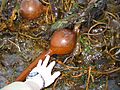
Algae bladder

See also
 In Spanish: Alga para niños
- AlgaeBase
- Eutrophication
- Microbiofuels
- Phycotechnology
- Plants
